


Gossip Harbor: Merge & Story review
 Analysis by GetAllApps
I find Gossip Harbor: Merge & Story most appealing when I want a puzzle game with a reason to keep going beyond the next board move. Its setting on Brimwave Beach gives the merging a story-shaped purpose: I combine items, use progress to bring locations back to life, and follow a mystery involving the people around the harbor. That mix makes it feel different from a pure score-chasing puzzle, though it also means the game asks for patience with both its puzzles and its unfolding plot.
What the beach setting adds to the puzzles
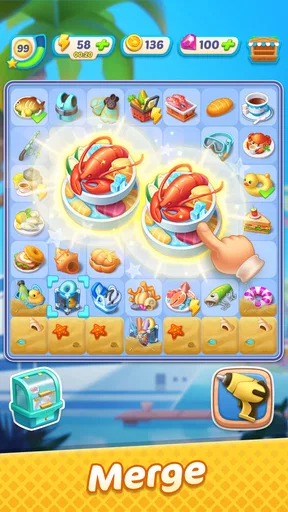
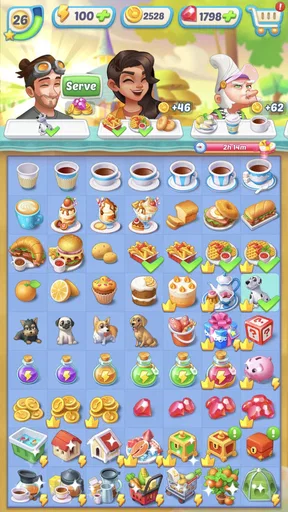
Made by Microfun Limited, this free puzzle game is built around merging rather than the familiar match-three routine. The basic appeal is easy to grasp: create and combine items, make room for new possibilities, and put the results toward restoration and story progress. I like that a board action feels connected to a larger goal, rather than ending as an isolated burst of color. The beach and its residents give the ongoing tasks a sense of place.
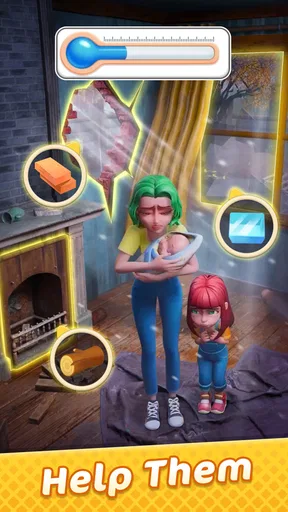
The story is part of the reward, not just decoration. As the mystery develops, rebuilding Brimwave Beach gives me a steady visual reason to continue, while character drama supplies context for the next stretch of play. This suits players who enjoy light narrative alongside a puzzle. If you only want a self-contained brainteaser with a clean finish, the continuing story may feel like an interruption rather than a benefit.
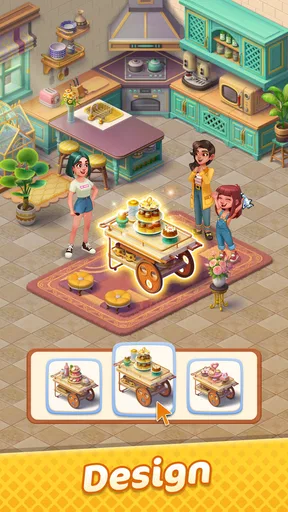
The presentation also shapes the pace. Restoration creates a sense of visible progress, while the merge board asks me to think about which items to combine and what I need next. That pairing is more satisfying than a sequence of unrelated levels when I have time to follow the plot. On the other hand, it can feel less direct than a conventional puzzle game: I may be planning board space and working toward a task before I get the story beat I was hoping for.
Why the merge board rewards a little planning
A useful habit is to treat open board space as a resource, not as spare decoration. Before combining items, I try to consider whether the resulting object helps with a current goal and whether I will have room to manage the next chain. This matters because merging can create a satisfying sense of momentum, but clutter makes that momentum harder to maintain. Even without complicated rules, a small pause to organize can save frustration.
I also find it helpful to keep the short-term objective in view. When a task points toward a particular item or restoration step, focusing on that target is more efficient than merging every available pair simply because I can. It turns casual tapping into a light planning exercise. Players who enjoy sorting, sequencing, and deciding what to keep will likely get more out of the board than players who prefer puzzles that explain one fixed solution at a time.
Progress at a comfortable pace
The game is a better fit for short visits than for someone expecting a long, uninterrupted campaign session every time they open it. A quick check-in can work well when I want a little puzzle activity and a small piece of story progress. In an everyday scenario, I might open it during a quiet break, focus on one current objective, and stop when I have made a useful step rather than trying to clear everything at once. That approach makes the experience feel relaxed instead of turning it into a checklist.
There is a trade-off: narrative progress and restoration can make the game’s momentum feel tied to how quickly I can advance through the merge tasks. If I am in the mood for immediate, repeated puzzle rounds, that slower, goal-based rhythm may not satisfy me. For that mood, a straightforward match-three game or a puzzle with independent levels is likely a better choice. Gossip Harbor is strongest when I want the puzzle actions to feed a continuing world.
Spending, fairness, and what can be judged
The game is free to download, with in-app purchases listed from $0.99 to $99.99 per item. That gives prospective players a clear reason to decide in advance whether they want to keep spending entirely optional: I would start without buying anything and see whether the board-and-story loop works for me at its natural pace. The listed range alone does not tell me what a particular purchase contains or how much it changes progress, so I would not treat the highest price as a measure of what is necessary.
For fairness, the key point is that this is a single-player-style puzzle and story experience as presented here, not a contest where another player’s wallet determines whether I can win. I would not claim that purchases are required, that they provide a particular advantage, or that the game’s progress is balanced in a specific way without knowing those details. My practical advice is to avoid buying in a moment of impatience: first decide whether you enjoy the core merge loop, then consider whether any optional purchase is genuinely worth it to you.
There is no need to spend just because a game is free-to-play, and I would be especially cautious about purchases if I mainly want a no-cost pastime. The broad price range makes it sensible to check the exact item and amount in the app store before confirming anything. For younger players, or anyone sharing a device, it is also worth using the device’s purchase controls so an accidental tap does not become a real charge.
Who will enjoy the story, and who may prefer another puzzle
I would recommend it to someone who likes casual merging, gradual restoration, and a plot that unfolds over multiple sessions. It is also a reasonable pick for players who want a forgiving-feeling activity to dip into rather than a competitive challenge demanding constant attention. Its Everyone age rating reflects its broad intended audience, but personal preferences still matter: anyone uninterested in character drama may find the story beats less rewarding than the puzzle itself.
I would steer away from it if you want a purely skill-based puzzle with a clear endpoint, a fast stream of standalone levels, or a game that never puts narrative between you and the next challenge. It is also not my first recommendation for someone who dislikes managing a crowded merge board. In that case, a classic jigsaw, a logic-puzzle collection, or a level-based matching game may feel cleaner and more predictable.
Compared with the usual alternatives in the puzzle category, its defining difference is the combination of merging with beach restoration and mystery storytelling. A match-three game typically centers each level on a discrete board objective; a logic game asks for a solution to a self-contained problem. Here, the loop is more about producing useful items and carrying progress forward. That makes the experience more personal and continuous, but less immediately tidy than either alternative.
Practical details before you install
The game launched on September 9, 2022, and its current version is 4.10.5. It requires Android 7.0 or later. On the app store, it has a 4.4 average from around 728,000 ratings, with more than 50 million installs. Those figures suggest that it has found a substantial audience, but they cannot tell you whether its pacing or story style will suit you; a short trial is more useful than popularity alone.
One detail worth keeping in mind is that a large audience does not make the game an automatic fit for every puzzle fan. I would judge it by its specific rhythm: merge toward a goal, use progress to restore the setting, then return to the mystery. If that sounds appealing, the story gives you a reason to care about the next task. If you prefer puzzles that stand entirely on their own, its most distinctive feature is also the part you may enjoy least.
My verdict on the overall experience
After weighing its strengths and trade-offs, I see Gossip Harbor: Merge & Story as a good casual choice for players who want their puzzle progress to change a place and move a story along. I especially like the way the merge board gives small decisions a purpose beyond making a high score. Its best use is a few relaxed minutes at a time, with attention on one objective rather than pressure to push through everything.
The main caution is pace. Story-led restoration can be less immediately rewarding than a self-contained puzzle, and the presence of optional purchases means I would approach spending deliberately rather than assume it is needed. The game’s purchase range is clear, but the details that would establish how particular items affect progress are not available here, so I would check each offer in the app before paying. For a free, accessible merge puzzle with a continuing beach mystery, it is worth trying; for a competitive or strictly logic-focused experience, I would choose something else.
Pros and cons
Pros
- The merge board makes short play sessions feel rewarding.
- New story chapters give players a reason to keep progressing.
- Characters add personality to the renovation storyline.
- Merge chains are easy to understand for newcomers.
- The colorful art makes items and locations easy to recognize.
Cons
- Energy limits can interrupt longer play sessions.
- Progress may slow when required items take many merges to create.
- Some tasks require waiting for generators to recharge.
- Random item drops can make specific objectives feel unpredictable.
- Optional purchases may be tempting when resources run low.


